1. Introduction
Artificial Intelligence (AI) is transforming healthcare faster than ever before. From predictive diagnosis to robotic procedures, technology is reshaping the way nurses work, learn, and deliver patient care. As India moves toward a tech-driven medical ecosystem, AI in Nursing is becoming not just a trend—but a necessity.
This blog explores the biggest AI-driven changes that will define the future of nursing, and why upcoming students should prepare early for a tech-integrated healthcare career.
2. How AI Is Changing Nursing Today
✔
Smarter Clinical Decision Support
AI tools can analyze patient symptoms, vitals, and lab results to assist nurses in making quicker and more accurate clinical decisions.
Example: Early detection of sepsis or stroke using AI alerts.
✔
Automated Routine Tasks
Nurses can save hours per shift as AI handles tasks like:
- Monitoring vital signs
- Updating electronic medical records
- Medication reminders
This means more time for direct patient care.
✔
AI Chatbots for Patient Engagement
Hospitals now use AI-powered chatbots to answer patient queries, schedule appointments, remind them about medications, and manage post-discharge follow-up.
✔
Robotic Nurses & Assistive Devices
AI robots can:
Deliver medicines
- Move equipment
- Assist in lifting patients
Reducing physical strain and improving safety.
3. Future Trends: How AI Will Transform Nursing (2026–2035)
1. Predictive Nursing
AI will predict patient deterioration before it happens.
Example: “Next 8-hour risk” warnings for ICU patients.
2. Virtual Nursing Assistants
24/7 virtual nurse monitors in hospitals and home-care settings will support real nurses in triage, symptom checks, and patient communication.
3. AI Enhanced Skill Training
Nursing education will be powered by:
VR/AR simulations
- AI-guided practice labs
- Virtual patients
Students can learn critical care skills without risk.
4. Personalized Care Plans
AI will analyze genetics, lifestyle, and medical history to produce custom treatment and nursing plans.
5. AI in Nursing Administration
Workforce management, scheduling, and staffing will be automated—reducing burnout and improving efficiency.
6. Tele-Nursing 2.0
Advanced remote monitoring systems will allow nurses to manage multiple patients from a centralized digital hub.
4. Will AI Replace Nurses? The Real Answer
Absolutely NOT.
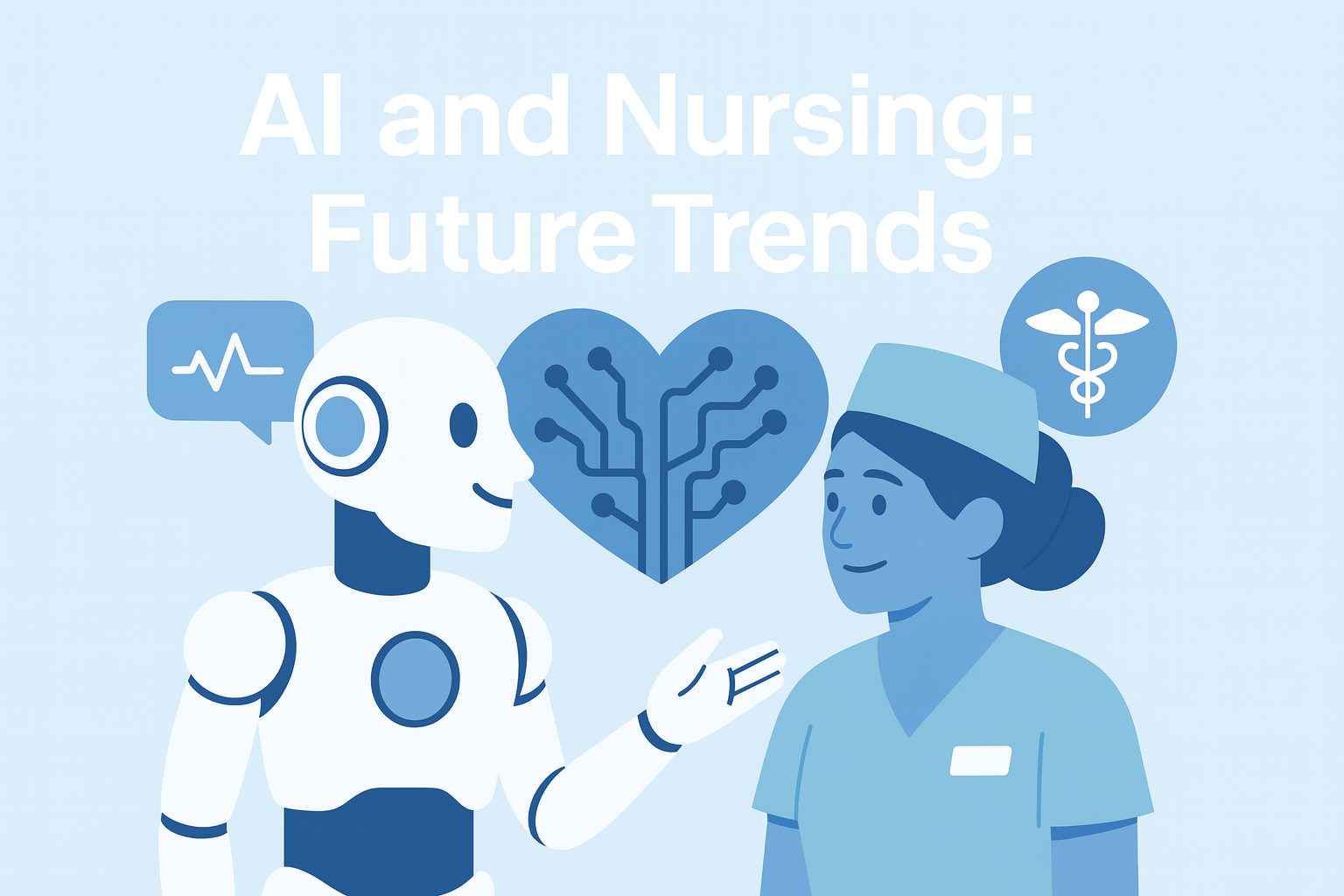
AI will support, not replace, nurses.
AI can perform:
Data processing
- Monitoring
- Repetitive tasks
But nursing requires:
Empathy
- Critical thinking
- Human connection
- Ethical decision-making
These are skills AI can never replace.
The future belongs to AI-empowered nurses, not AI replacing nurses.
5. Skills Future Nurses Must Learn
To stay future-ready, nursing students should build:
✔ Digital literacy
✔ AI & healthcare technology awareness
✔ Data documentation skills
✔ Telehealth communication skills
✔ Clinical decision-making
✔ Simulation-based learning
These skills will make students stand out in the global nursing workforce.
6. Why Students Should Not Fear AI
Instead of reducing jobs, AI is creating more nursing opportunities in:
Remote care
- Medical AI management
- Robotics coordination
- Digital patient care
- AI-assisted ICUs
Countries like the UK, Germany, Japan, Ireland, and Australia will need lakhs of skilled, tech-enabled nurses by 2030.
7. How GMNA Helps Students Stay Future-Ready
GMNA guides students by:
Helping them choose modern, tech-enabled nursing colleges
- Providing insights into AI-based nursing trends
- Guiding students toward global career opportunities
- Ensuring transparent, verified information for admissions
Your nursing education should prepare you not just for today—but for the next 10 years.
8. Conclusion
AI is not a threat to nursing; it is the future of nursing. Nurses who adapt to technology will lead the next generation of healthcare. With strong clinical training and AI-supported skills, upcoming students can build a safe, high-paying, and future-proof career.